




Buying Guides
DTG vs DTF Printing: Which Is Right for Your Apparel Shop?
Aug
DTG vs DTF printing is one of the most important decisions an apparel shop can make. Both methods can produce detailed, full-color graphics without the screen setup required for traditional screen printing, but they solve different production problems.
DTG printing is usually the stronger fit when a shop focuses on cotton or cotton-rich garments, personalized orders and a soft print feel. DTF printing is often better when the business needs broader fabric compatibility, flexible print placement or transfers that can be prepared before the final garment is selected.
Neither method is automatically better for every business. The right choice depends on the garments you sell, the artwork customers order, your average production volume, available workspace and the finishing equipment you can operate consistently.
DTG vs DTF Printing: Quick Answer
Choose DTG if most of your work is premium cotton apparel and customers care about a soft, breathable print. Choose DTF if your jobs involve mixed fabrics, repeated logos, unusual print locations or transfers that may be stored and pressed later.
Consider offering both DTG and DTF workflows if your shop serves fashion brands, businesses, schools, teams and other customers whose garment requirements change from order to order.
DTG vs DTF Printing Comparison
| Comparison | DTG Printing | DTF Printing |
|---|---|---|
| How it works | Ink is printed directly onto a garment. | A mirrored design is printed onto film and transferred with adhesive, heat and pressure. |
| Best-known strength | Soft-feel, detailed printing on suitable apparel. | Versatility across many heat-press-compatible fabrics and placements. |
| Typical fabrics | Cotton and cotton-rich garments; some systems also support properly pretreated polyester. | Cotton, polyester, blends and other tested fabrics that tolerate the required heat and pressure. |
| Print feel | Usually softer, especially on light cotton. | Creates a more noticeable layer on top of the garment. |
| Pretreatment | Commonly required for white ink and certain fabrics. | Liquid garment pretreatment is normally not part of the transfer workflow. |
| Finishing | The printed garment must be properly cured. | The printed film receives adhesive powder, is cured and is then heat-pressed. |
| Production style | Each garment is loaded and printed directly. | Transfers can be produced separately and applied later. |
| Common use | Personalized shirts, premium cotton apparel, photographs and short runs. | Uniforms, mixed garments, repeated logos and difficult print locations. |
This comparison describes common production patterns, not universal rules. Results vary by printer, ink, pretreatment, film, powder, garment, artwork and curing process.
What Is DTG Printing?
Direct-to-garment printing uses a specialized inkjet printer to apply textile ink directly onto a garment secured on a platen. The process is digital, so a shop can print photographs, gradients, fine details and artwork with many colors without making separate screens.
A typical DTG workflow includes:
- Preparing and sizing the artwork
- Pretreating the garment when required
- Drying or pressing the pretreatment
- Loading and positioning the garment on the platen
- Printing the white underbase and color layers
- Curing the completed print according to the ink and garment requirements
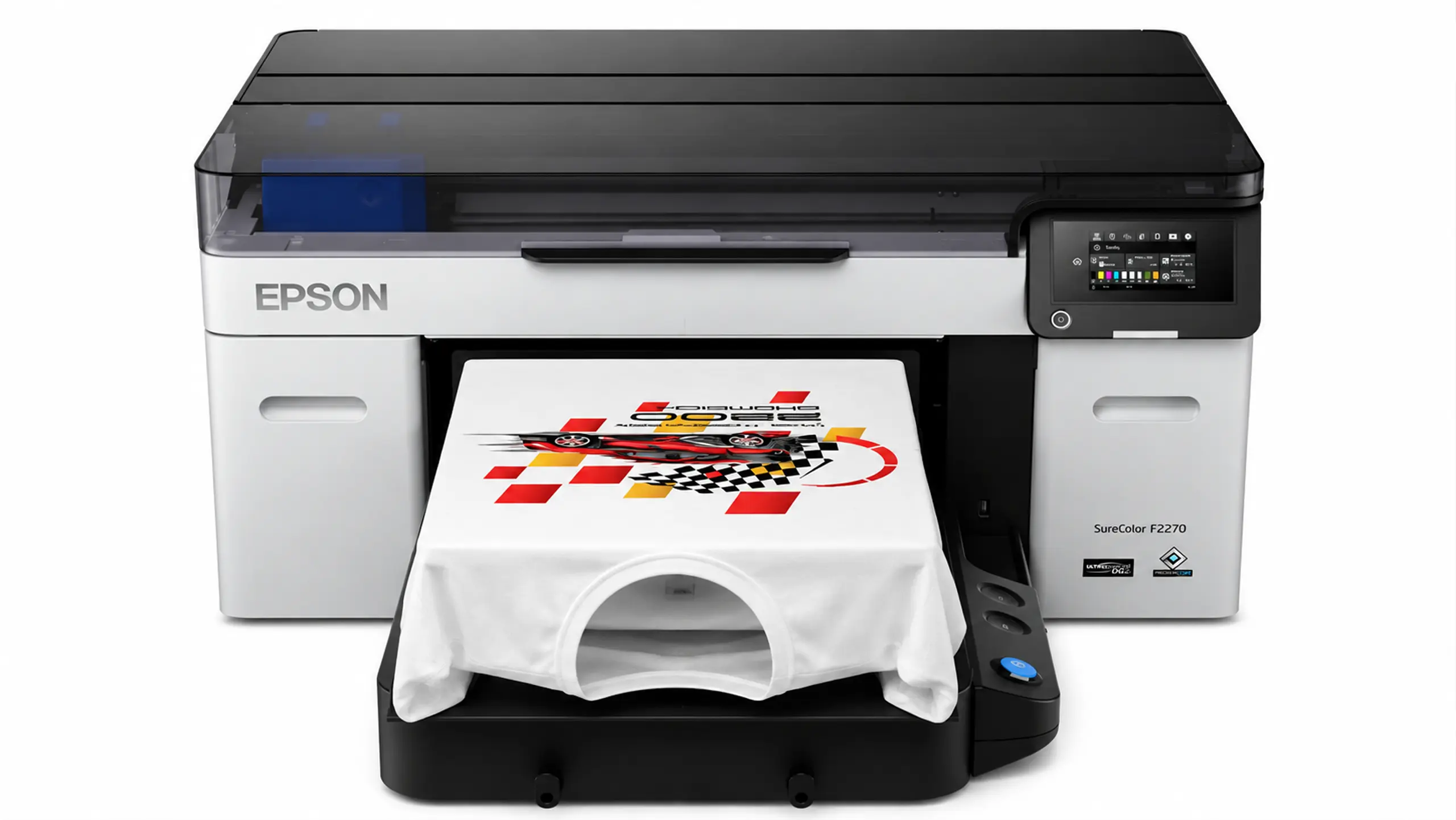
The quality of a DTG print depends on more than the printer. Garment composition, surface texture, pretreatment consistency, ink settings and curing all affect color, feel and wash performance.
Advantages of DTG Printing
Soft print feel: DTG ink is applied directly to the fibers. On a suitable light-colored cotton shirt, the printed area can feel softer and more breathable than a transfer layer.
Detailed full-color artwork: DTG is well suited to photographs, smooth gradients, fine lines and designs containing many colors.
Efficient personalization: A shop can change names, numbers or artwork from one garment to the next without producing a new physical screen.
Practical short runs: DTG can produce a single custom garment or a small on-demand order without the setup associated with screen printing.
Direct workflow: The printer decorates the final garment rather than producing a separate transfer that must be positioned later.
Limitations of DTG Printing
Garment selection affects results: DTG is most closely associated with cotton and cotton-rich apparel. Some equipment can also print directly on properly pretreated polyester, but the exact garment and process should be tested before production.
Pretreatment requires control: Uneven application can cause staining, inconsistent white ink, poor color or reduced wash performance.
Each garment must be loaded: The operator positions, prints and unloads every item. Loading technique can affect alignment and throughput.
White-ink maintenance matters: Shops must follow the printer manufacturer’s cleaning, agitation and operating procedures to maintain dependable white-ink performance.
Curing is essential: A print that looks good when it leaves the printer can still fail if it is not cured at the correct temperature and time.
What Is DTF Printing?
Direct-to-film printing produces a transfer instead of printing directly onto the final garment. The design is printed in reverse onto specialized film, a white layer is added, adhesive powder is applied to the wet print, and the transfer is cured before it is heat-pressed onto the garment.
A typical in-house DTF workflow includes:
- Preparing and mirroring the artwork
- Printing the color and white-ink layers onto compatible film
- Applying adhesive powder evenly to the printed area
- Removing excess powder
- Curing or melting the adhesive according to the material instructions
- Positioning the transfer on a tested garment
- Applying the transfer with the specified heat, pressure and dwell time
- Peeling the carrier film as instructed
- Completing a finishing press when required
A shop does not have to print its own transfers to offer DTF decoration. Some businesses purchase completed transfers and handle only the storage, positioning and heat-press steps.
Advantages of DTF Printing
Broader fabric options: DTF can work across many cotton, polyester and blended garments as long as the material is compatible with the transfer and can tolerate the required heat and pressure.
No normal liquid garment pretreatment: The adhesive system bonds the printed transfer to the fabric, so the standard DTF workflow does not use the liquid pretreatment step associated with many DTG jobs.
Flexible print placement: A transfer can be positioned on sleeves, pockets, pant legs and other locations that may be difficult to load on a DTG platen.
Transfers can be prepared in advance: Frequently ordered logos and designs can be printed, cured and stored before the final garment is decorated.
Useful for mixed orders: One design can be applied to several tested garment types, helping shops handle uniforms, workwear and event apparel.
Can DTF Create Glitter and Holographic Effects?
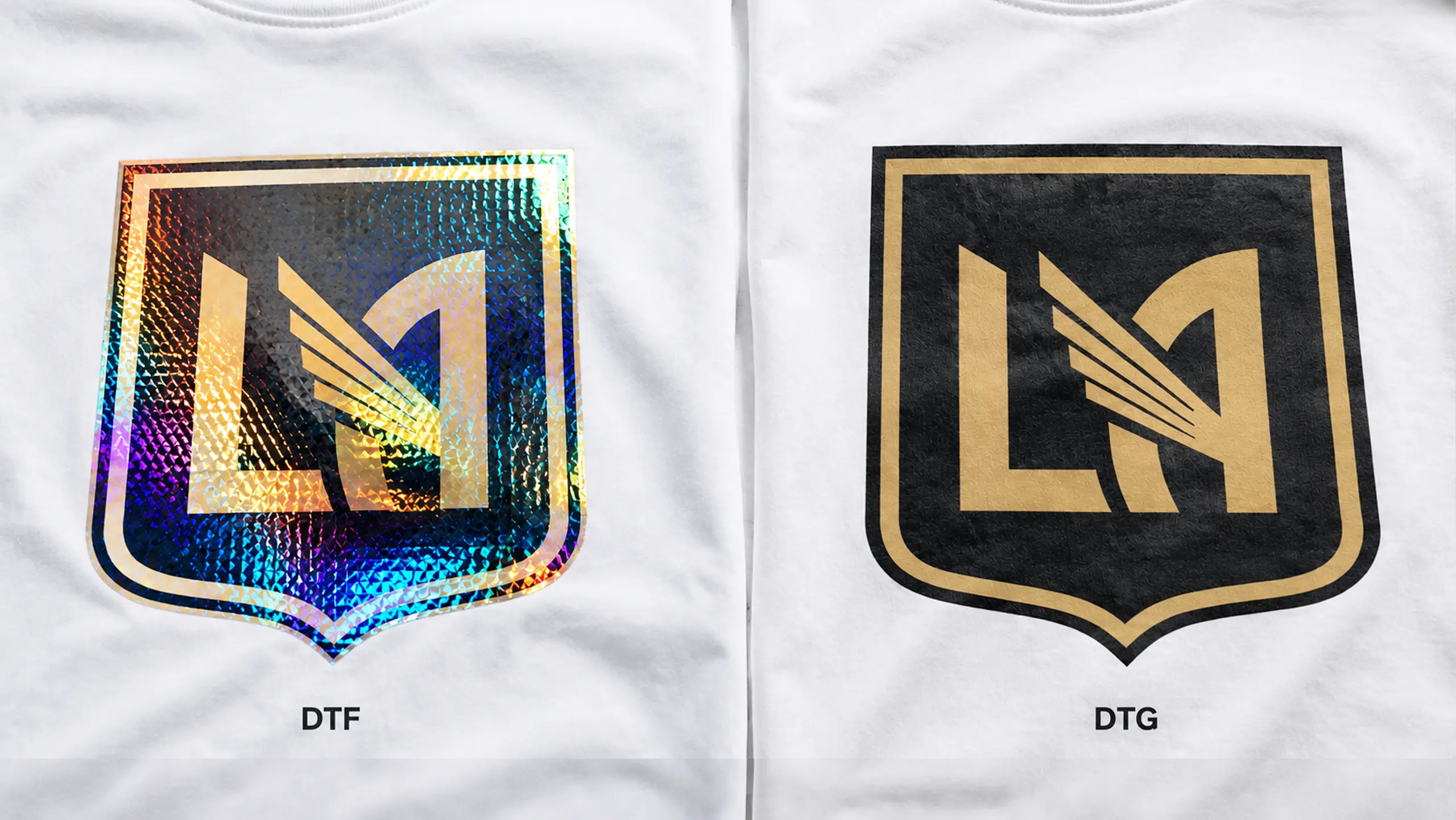
Yes. Compatible specialty DTF film can add glitter, holographic reflections and structured light effects that ordinary clear transfer film does not provide. The visual effect is engineered into the film’s coating and is transferred with the printed design. It is not created by simply selecting a glitter color in the artwork or by using standard CMYK and white ink alone.
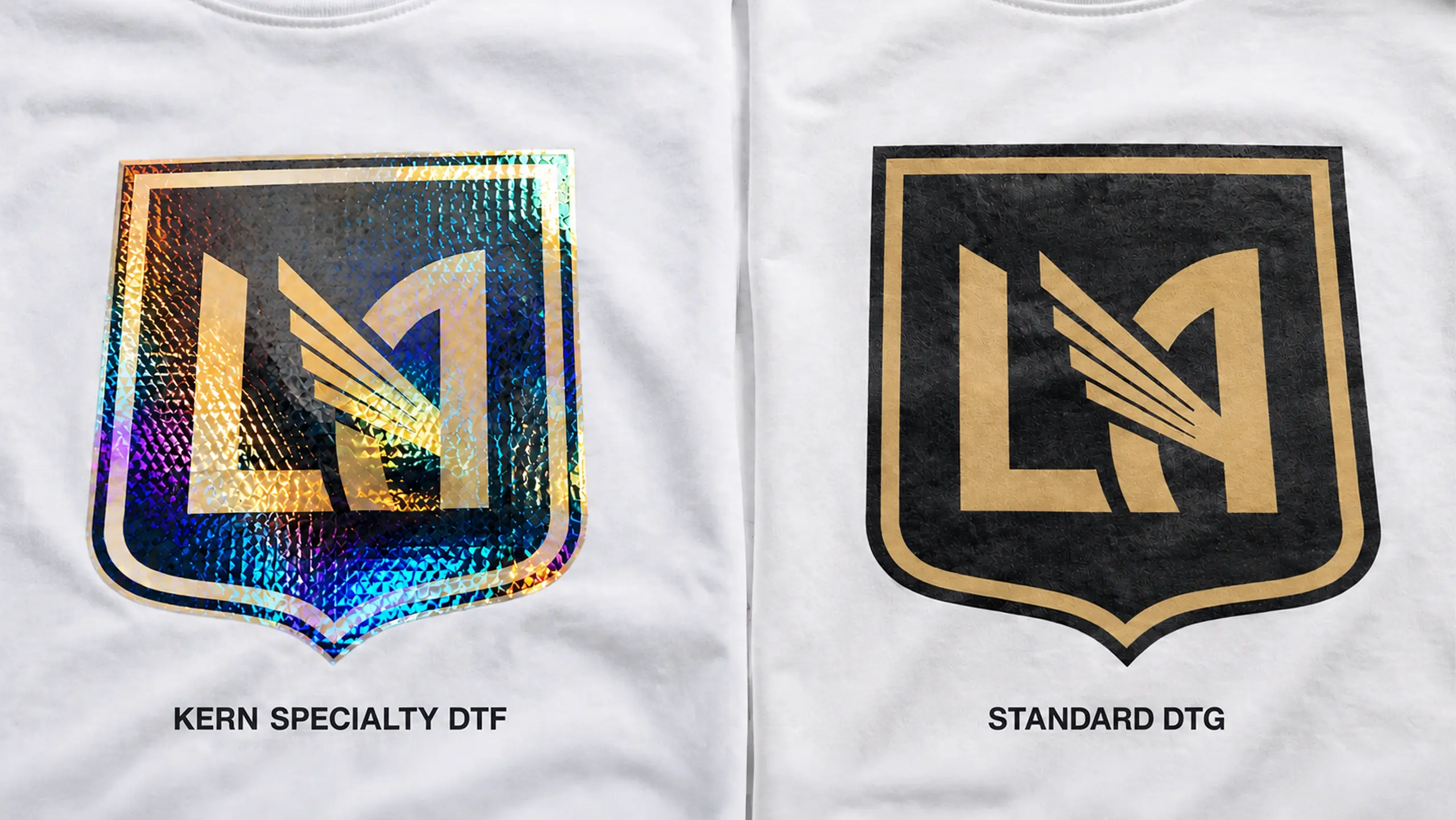
This gives DTF shops another way to create premium apparel, stagewear, team graphics, limited-edition merchandise and statement designs. A standard DTG ink set can print excellent color and detail, but it does not reproduce the same film-embedded holographic or glitter surface effect.
Buffalo Imaging offers Kern specialty DTF films with three distinct finishes:
- Kern DG-01 Beach Sand Glitter DTF Film uses fine glitter embedded in the coating to create an even, tactile shimmer. It uses the normal DTF adhesive-powder workflow and is available in roll and sheet formats.
- Kern DNH-01 Entire Hologram DTF Film creates a color-shifting holographic finish across the visible printed design instead of limiting the effect to a small accent.
- Kern DPH-02 Pyramid Holographic DTF Film uses a structured prism pattern to create multidirectional light movement and a more dimensional holographic appearance.
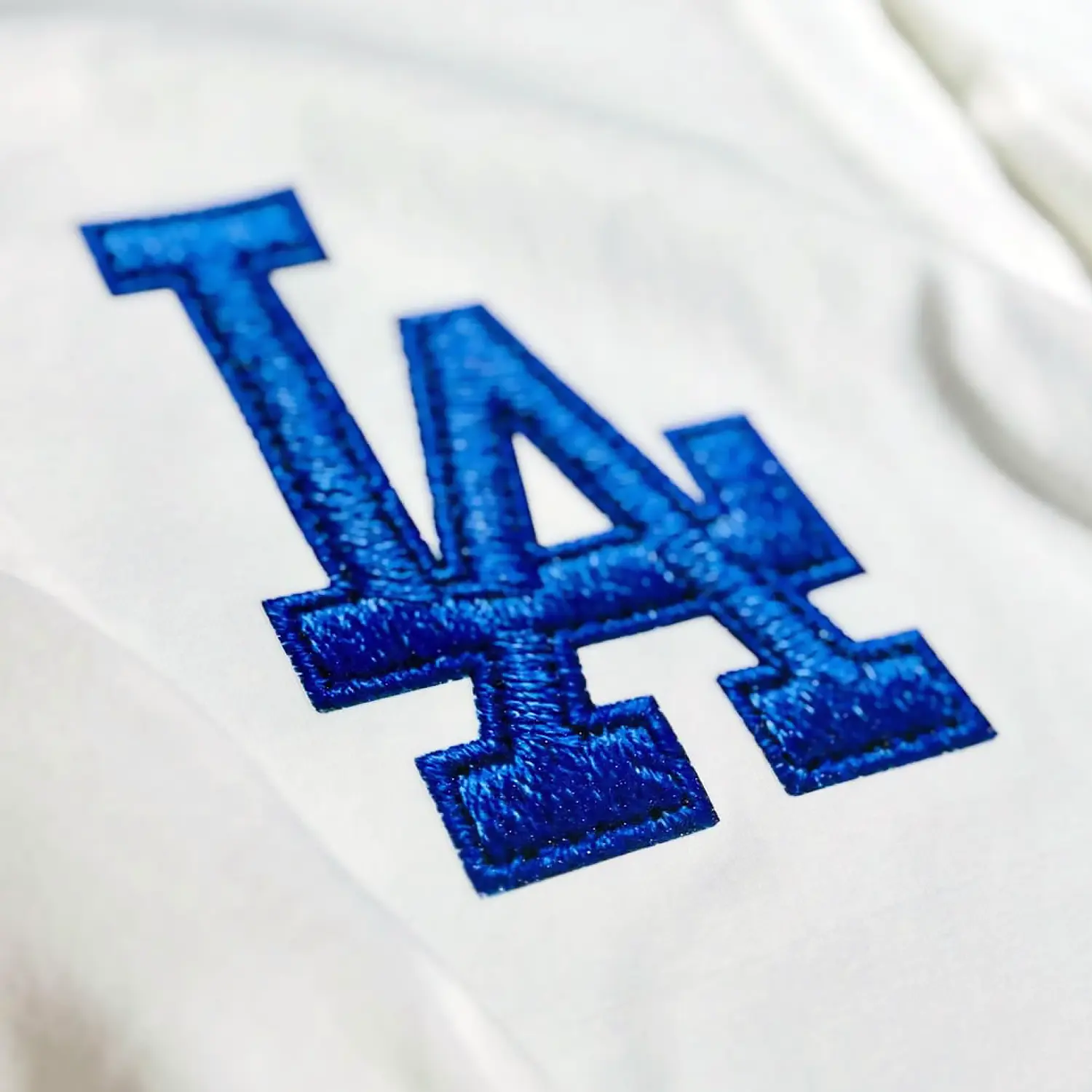
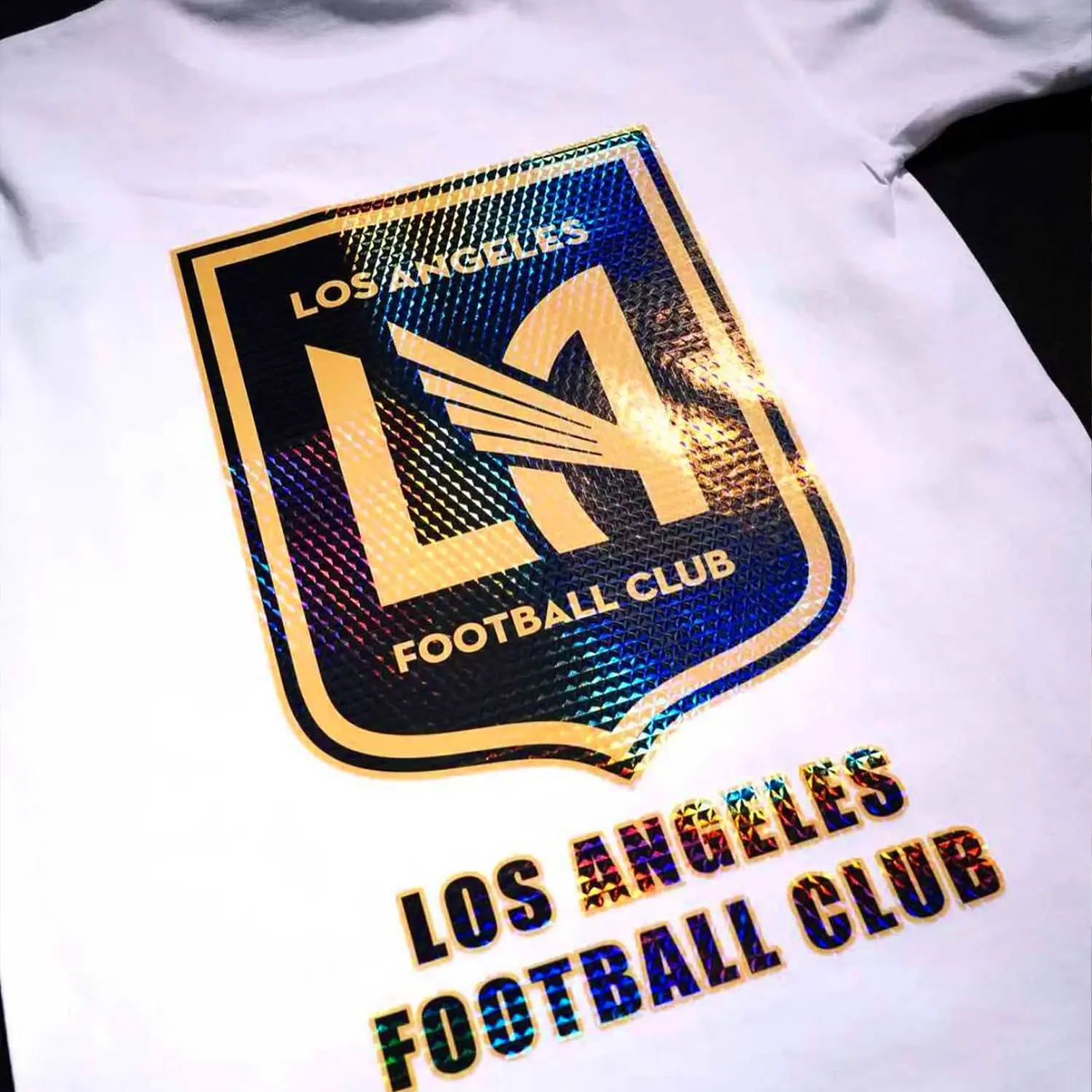
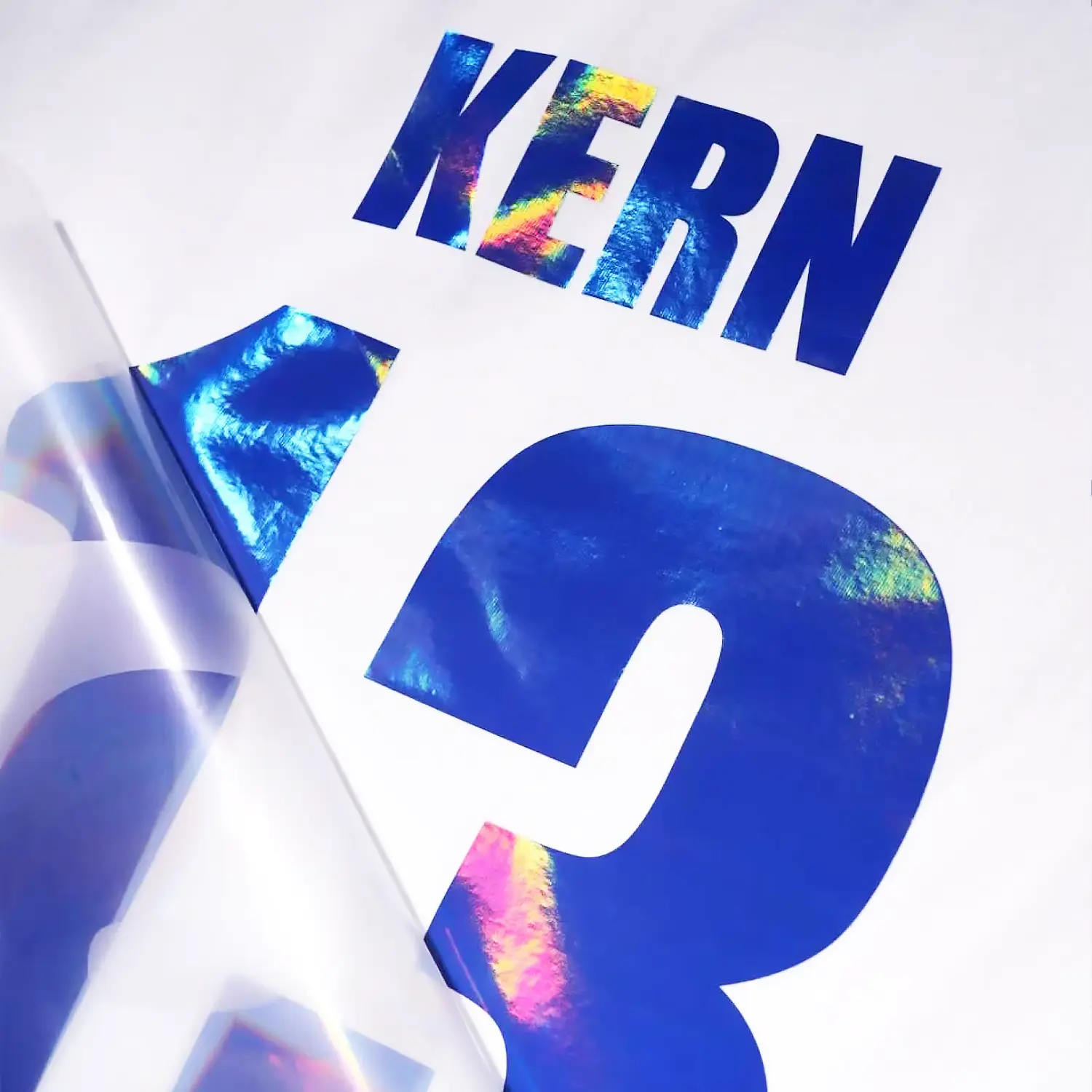
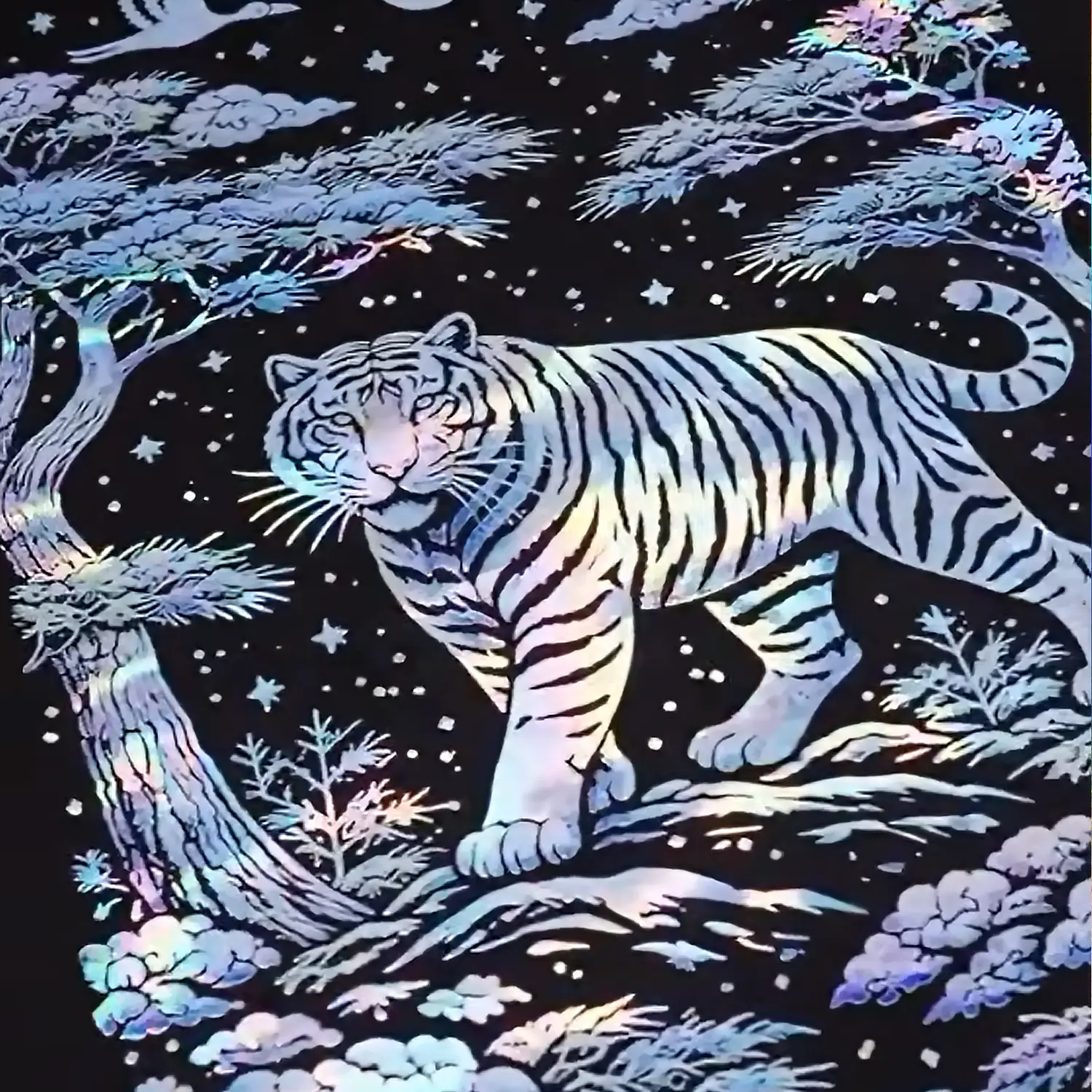
Specialty film is not a universal replacement for standard DTF film. The added texture and reflection intentionally change the print’s appearance and feel, and the effect can look different as the garment and lighting move. Test the exact printer, ink, powder, film, garment and heat-press combination before production. Follow the current Kern instructions for film orientation, curing, temperature, pressure, peel timing and any recommended finishing press rather than assuming one setting applies to every specialty film.
Limitations of DTF Printing
More production stages: Printing, powder application, curing, pressing and peeling must all be controlled. Each step creates another opportunity for inconsistency.
A transfer layer remains: DTF sits on the surface of the fabric. A small logo may feel flexible, but a large solid design will normally feel more noticeable than a comparable DTG print on light cotton.
Powder handling needs planning: In-house transfer production requires shops to follow the adhesive manufacturer’s safety instructions and plan for appropriate handling, ventilation and protective equipment.
Heat-sensitive garments need testing: High heat can affect dyes, coatings and synthetic fabrics. Fabric compatibility does not guarantee that every blank will press successfully.
Transfer storage must be controlled: Prepared transfers should be protected from moisture, contamination, excessive heat and other conditions that may affect performance.
DTG vs DTF: The Most Important Differences
Fabric Compatibility
DTG is a natural fit for cotton and cotton-rich apparel because those fabrics can accept the ink and produce the soft finish many clothing brands want. Certain professional DTG systems also support polyester when the correct polyester pretreatment and settings are used.
DTF is generally more flexible across cotton, polyester and blended fabrics. That flexibility is valuable for uniforms, performance apparel, workwear and orders containing several garment types.
Neither process should be described as suitable for every fabric. Test the exact blank, color, coating and production settings before accepting a large order.
Print Feel and Appearance
DTG normally produces the softest result on light cotton because the ink is printed into the garment. This is especially useful for fashion apparel and large designs where comfort matters.
DTF creates a defined layer over the fabric. Small graphics can feel flexible, but heavy ink coverage and large solid areas are more noticeable. Dark-garment DTG prints also use a white underbase, so they generally feel heavier than DTG prints on light fabric.
Order printed samples when possible. Actual artwork and garment choices reveal more than a general DTG-versus-DTF label.
Artwork and Image Quality
Both methods can reproduce detailed, full-color artwork. DTG is particularly effective for photographs, gradients and distressed graphics designed to blend into a cotton garment.
DTF can deliver sharp details, strong white opacity and consistent placement across several garment styles. It is a practical choice for logos and designs that must remain visually consistent on different fabric colors.
Artwork preparation still matters. Very small text, transparent effects, distressed areas, fine lines and large solid fills may require different settings or design adjustments for each process.
Production Workflow
DTG keeps printing and garment decoration together. The operator prepares the garment, loads it, prints it and cures the finished item.
DTF separates transfer creation from final application. Transfers can be batched and pressed later, but an in-house operation must manage film, powder, curing, storage and heat-press procedures.
For one personalized cotton shirt, DTG’s direct workflow may be convenient. For a repeated logo used across several garments, a prepared DTF transfer may simplify final decoration.
Equipment and Workspace
A DTG shop normally needs the printer, the correct garment platens, suitable pretreatment equipment or application method, a heat press or conveyor dryer, production software, humidity control and space for garment preparation.
An in-house DTF shop normally needs the printer, compatible DTF transfer film, adhesive powder, a controlled powdering method, curing equipment, a commercial heat press and an appropriate plan for ventilation and material handling. Higher-volume operations may use an automated powder shaker and dryer. A shop using outsourced transfers needs less printing equipment but still requires a reliable heat press and a repeatable application process.
Compare the complete workflow, not only the printer price. Power, ventilation, climate control, finishing equipment and operator space can change the true cost of installation.
Cost Per Finished Garment
There is no universal answer to whether DTG or DTF is cheaper. Calculate the cost of the jobs your shop actually receives, including:
- Ink and total image coverage
- Garment pretreatment
- Transfer film and adhesive powder
- Blank garments
- Misprints and wasted materials
- Operator labor
- Pressing and curing time
- Maintenance supplies and downtime
- Workspace, power and ventilation
- Outsourced transfer pricing and shipping
DTG may be attractive for direct, short-run cotton production. DTF may be efficient when transfers are batched, applied across different products or purchased from a specialist. Profitability should be calculated by job type rather than by a generic online cost-per-print claim.
Wash Durability
Properly produced DTG prints and properly applied DTF transfers can both provide commercial-quality wash performance. Neither process is automatically more durable in every situation.
DTG performance depends on garment preparation, pretreatment, ink and curing. DTF performance depends on film, powder, curing, press temperature, pressure, dwell time and peeling procedure. Customer care also affects both methods.
Do not promise a fixed number of washes unless your shop has tested the complete garment, artwork and production combination.
Which Printing Method Fits Your Apparel Shop?
Choose DTG Printing If:
- Most orders use cotton or cotton-rich apparel
- A soft, breathable print feel is a major selling point
- You produce personalized, one-off or short-run garments
- Your artwork frequently includes photographs and gradients
- You can maintain a consistent pretreatment process
- You prefer to print directly on the final garment
Choose DTF Printing If:
- You regularly decorate several fabric types
- You produce uniforms, workwear or performance apparel
- You need flexible placement on sleeves, pockets or other locations
- You want to prepare transfers before garments are needed
- You frequently repeat company logos or standard designs
- You already have a controlled heat-press workflow
- You can support the material-handling requirements of in-house transfer production
Consider Both Workflows If:
- Your shop serves both fashion and commercial customers
- Your orders include premium cotton shirts and synthetic uniforms
- You want to select the process based on each garment and design
- You are turning away jobs because one method cannot cover the requested application
- You have enough demand to justify training and maintaining both workflows
Can One Printer Support DTG and DTF Workflows?
Yes. Some professional garment printers are purpose-built to support direct-to-garment printing and transfer-film output from one platform.
The Epson SureColor F2270 hybrid DTG and DTFilm printer supports both direct garment production and Epson’s DTFilm workflow. DTF is the common industry search term, while DTFilm is the terminology Epson uses for transfer-film printing.
A hybrid printer does not remove the remaining DTF finishing steps. Compatible film, adhesive powder, controlled powder application, curing equipment, a commercial heat press and appropriate material-handling procedures are still required for in-house transfer production.
For a shop that relies on DTG but also receives mixed-fabric or transfer requests, one hybrid platform can make both output methods available without purchasing two separate printers. The shop must still budget for the supporting equipment, supplies and training required by each workflow.
If you are comparing the F2270 with Epson’s previous-generation DTG platform, read our Epson F2270 vs F2100 comparison for a closer look at workflow, ink delivery, maintenance and upgrade considerations.
DTG vs DTF Printing: Final Recommendation
Choose the process that fits the orders your shop actually receives.
DTG is generally the stronger choice for premium cotton apparel, direct personalization, photographic artwork and a soft print feel.
DTF is generally the stronger choice for mixed fabrics, repeated logos, prepared transfer inventory, flexible print placement and specialty glitter or holographic effects created with compatible films.
A growing apparel business may benefit from offering both. A hybrid-capable printer such as the Epson SureColor F2270 can give a shop access to direct garment and transfer-film output from one printer platform, but the value depends on having real demand for both workflows.
Before investing, compare your most common garments, average order sizes, artwork, labor, workspace, finishing equipment and expected profit per job. The best method is not the one that wins the most online comparisons. It is the one your team can operate consistently and sell profitably.
View the Epson SureColor F2270 DTG and DTFilm hybrid printer.
Dedicated DTF Printers for Higher Production Volumes
Shops focused mainly on transfer-film production may prefer a dedicated DTF system. The Epson SureColor G6070 DTF printer offers a 35.4-inch print width for growing transfer operations, while the Epson SureColor G9070 DTF film printer provides a 64-inch platform designed for higher-volume production. The F2270 remains the better choice when a shop needs both direct-to-garment and transfer-film capabilities from one printer.
Build Your DTG or DTF Workflow with Buffalo Imaging
Buffalo Imaging supplies professional DTG and DTF printers, garment platens, pretreatment equipment, standard and Kern specialty DTF films, powder shakers and dryers, and commercial heat presses. Our team can help you compare the complete workflow instead of choosing a printer without the finishing equipment and supplies needed to operate it.
If your shop wants premium direct-to-garment output and transfer-film flexibility from one printer platform, review the Epson SureColor F2270 and contact Buffalo Imaging with your garment mix, expected production volume and available workspace.
DTG vs DTF Printing FAQs
Is DTG or DTF printing better?
Neither method is universally better. DTG is generally the stronger choice for soft-feel printing on cotton apparel, photographs and personalized short runs. DTF offers more flexibility across tested fabrics, garment styles and print locations. The right choice depends on the jobs your shop receives.
What is the main difference between DTG and DTF printing?
DTG prints ink directly onto a garment secured on a platen. DTF prints a mirrored design onto transfer film, adds adhesive powder and cures the transfer before it is heat-pressed onto the garment. DTG decorates the final garment directly, while DTF separates printing from final application.
Which is better for a small apparel business, DTG or DTF?
DTG may fit a small shop focused on premium cotton shirts, personalized products and short on-demand orders. DTF may fit a shop handling mixed fabrics, uniforms and repeated logos. A business should compare its actual order mix, labor, workspace and finishing equipment before choosing.
What fabrics can DTG and DTF print on?
DTG is commonly used on cotton and cotton-rich garments, although some professional systems can print on properly pretreated polyester. DTF can work across many cotton, polyester and blended fabrics that tolerate the required heat and pressure. Always test the exact blank before production.
Which feels softer, DTG or DTF?
DTG normally feels softer on light-colored cotton because the ink is printed into the garment fibers. DTF creates a transfer layer on top of the fabric, so large solid designs usually feel more noticeable. Dark-garment DTG prints can also feel heavier because they use a white underbase.
Does DTG or DTF require garment pretreatment?
DTG commonly requires liquid pretreatment when printing white ink and when working with certain fabrics. The standard DTF workflow does not apply liquid pretreatment to the garment; it uses adhesive powder on the printed film before curing and heat pressing.
What equipment is needed for DTG and DTF printing?
A DTG workflow typically requires a garment printer, pretreatment equipment or an application method, production software and a heat press or conveyor dryer. In-house DTF production also requires compatible film, adhesive powder, powder-handling and curing equipment, a commercial heat press and appropriate ventilation and safety procedures.
Is DTG or DTF cheaper per shirt?
There is no universal lower-cost method. The result depends on image coverage, ink, pretreatment, film, powder, blank garments, labor, waste, maintenance and order size. Calculate the cost and profit of your real job types instead of relying on a generic cost-per-print estimate.
Does DTF last longer than DTG?
Neither method always lasts longer. Both can provide commercial-quality wash performance when produced correctly. DTG durability depends heavily on preparation and curing, while DTF durability depends on the film, adhesive, curing and heat-press process. Garment quality and customer care affect both.
Can the Epson SureColor F2270 print DTF transfers?
Yes. The Epson SureColor F2270 supports direct-to-garment printing and the transfer-film process Epson calls DTFilm. The printer produces the film output, but compatible film, adhesive powder, powder application, curing equipment and a heat press are still required to complete an in-house transfer.
Need Help Choosing the Right Printer?
Speak with a Buffalo Imaging product specialist for help choosing the right printer, supplies or production workflow for your business.
Buffalo Imaging
2015 Saybrook Ave.
Commerce, CA 90040